

Categories
18
FEBLNG Flows, Shipping and Commercial Context
- February 18, 2026
- LNG
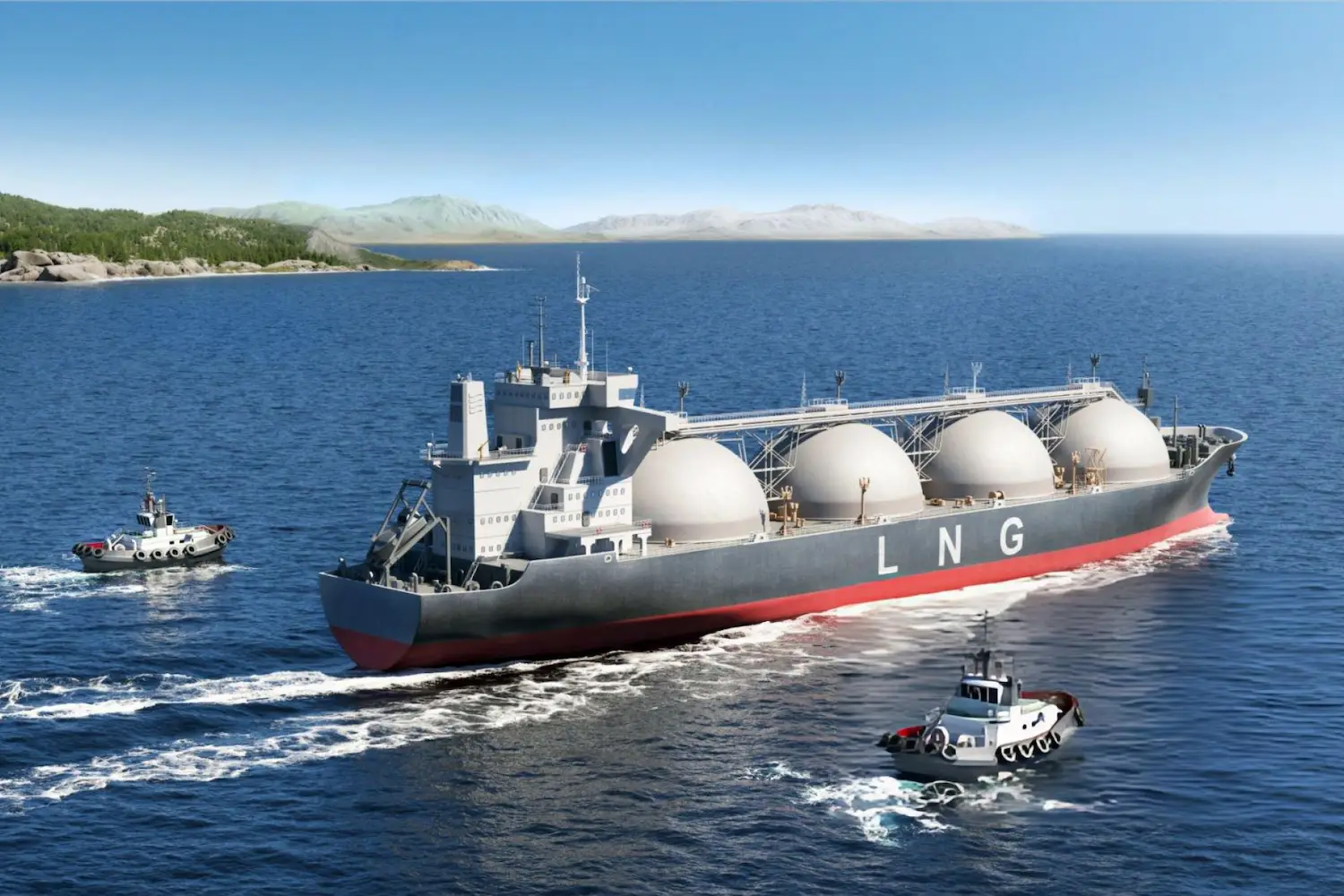
LNG is the mechanism that lets natural gas leave its pipeline basin and compete in another. That single fact is why the market is now discussed in global terms. It is also why the commercial work is rarely global in the simple sense. A cargo still has to be liquefied, loaded, carried, received and, in most cases, regasified. Each of those steps has a capacity limit, a cost and a calendar. If one of them is constrained, the destination price on a screen is only part of the story.
Teams that treat LNG as a floating version of pipeline gas tend to under-weight shipping, terminal windows and contract flexibility. Teams that treat it only as a freight problem tend to under-weight the demand side: storage, weather, competing fuels and the ability of a buyer to take the molecule when the vessel arrives. Useful commercial context sits between those two views.
The chain that actually moves a cargo
Liquefaction sets how much supply can leave a producing region in a given month. That number is not the same as nameplate capacity. Maintenance, feed-gas availability, weather and start-up schedules all change what is truly available. On the other side, regasification and send-out capacity determine whether a destination can physically accept the cargo. Between those two points sits the shipping market: vessel class, boil-off, canal or cape routing, and the cost of waiting.
A market can look long at the basin and still feel tight at the burner tip if ships or unload slots are scarce. The reverse is also true. Spare terminal capacity does not create supply if cargoes are already committed under term contracts or diverted to a higher-value basin. This is why LNG analysis that stops at production or at a single regional price so often misleads commercial planning.
Atlantic and Pacific are connected, not identical
LNG has narrowed the distance between basins, but it has not erased it. Atlantic cargoes still respond to European storage, weather and competing pipeline supply. Pacific cargoes still respond to Northeast Asian demand, nuclear availability, and the restocking decisions of utilities that plan on a seasonal horizon. The two basins meet when the spread is wide enough to pay for the extra voyage, the extra boil-off and the risk of arriving late.
That spread is not a standing invitation. It opens and closes with freight, canal conditions, and how many uncommitted cargoes are actually left in the month. A diversion that looks obvious on a monthly average can be unavailable on the dates a vessel is free. For buyers and sellers, the practical question is not “is the Pacific premium positive?” It is “can this cargo, on this ship, in this window, still capture it after costs and delay risk?”
Contracts shape what the spot market can do
A large share of LNG still moves under term arrangements. Destination flexibility, diversion rights, make-up clauses and price indexation determine how much volume can respond to a short-term signal. Spot and tender activity sit on top of that base. When term cargoes are rigid, the spot market does more of the balancing work and can look more volatile than the underlying supply-demand balance.
That has commercial consequences beyond trading. A buyer with little destination flexibility is more exposed to a local surplus. A seller with diversion rights has options, but also has to manage relationships, shipping and the risk that the alternative market closes before the vessel can be re-routed. Hybrid structures sit between those poles. None of them is inherently better. The fit depends on the participant’s portfolio, credit, shipping access and tolerance for volume risk.
- Map the physical chain first: feed-gas, liquefaction, shipping, terminal and send-out.
- Treat freight and waiting time as first-order costs, not residuals.
- Read term-contract flexibility before assuming a cargo can chase a spread.
- Separate seasonal restocking from structural demand. Winter tightness and summer tender activity are not the same market.
How 6soil uses this framework
Our LNG work is designed to help clients place a cargo, a contract or a market-entry question inside this chain. That includes supply and demand context, shipping and logistics considerations, and the commercial structures that decide whether a move is actually available. We do not operate vessels, terminals or liquefaction trains, and this article is not a forecast of prices or a recommendation to buy or sell a cargo.
It is a way to keep the discussion honest. LNG connects markets. Shipping, contracts and terminal reality decide how far that connection reaches on any given day.